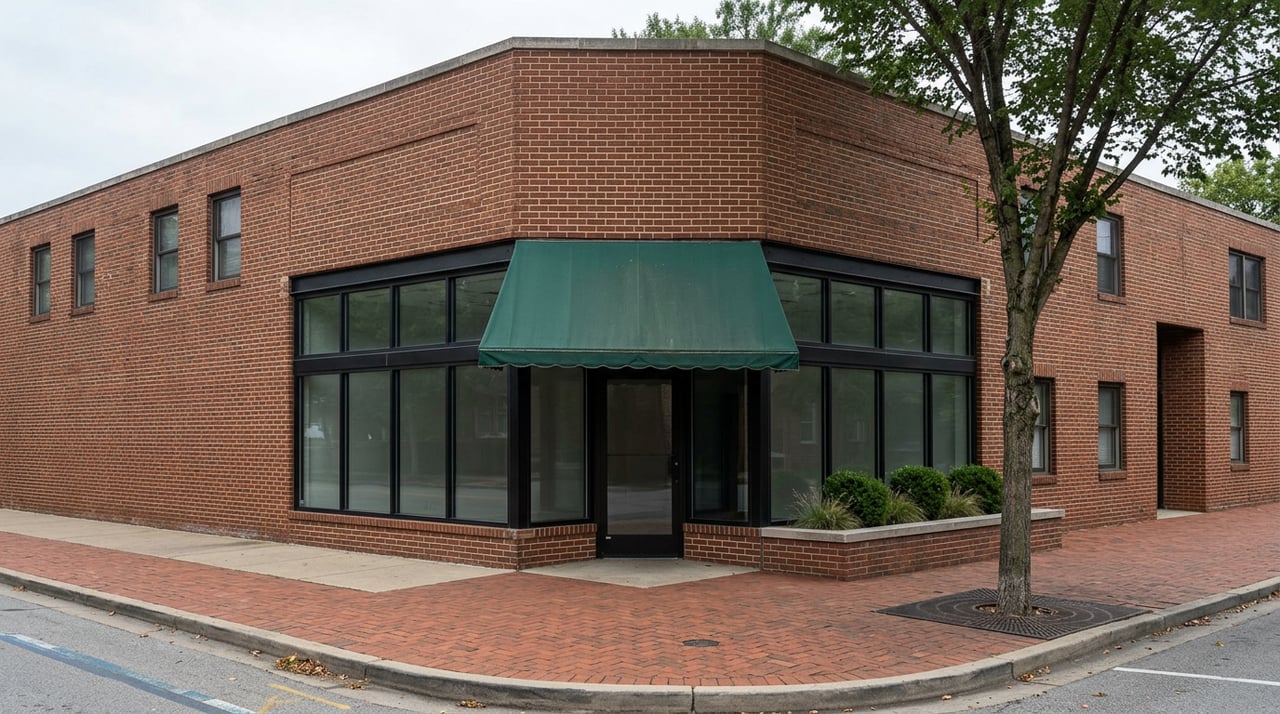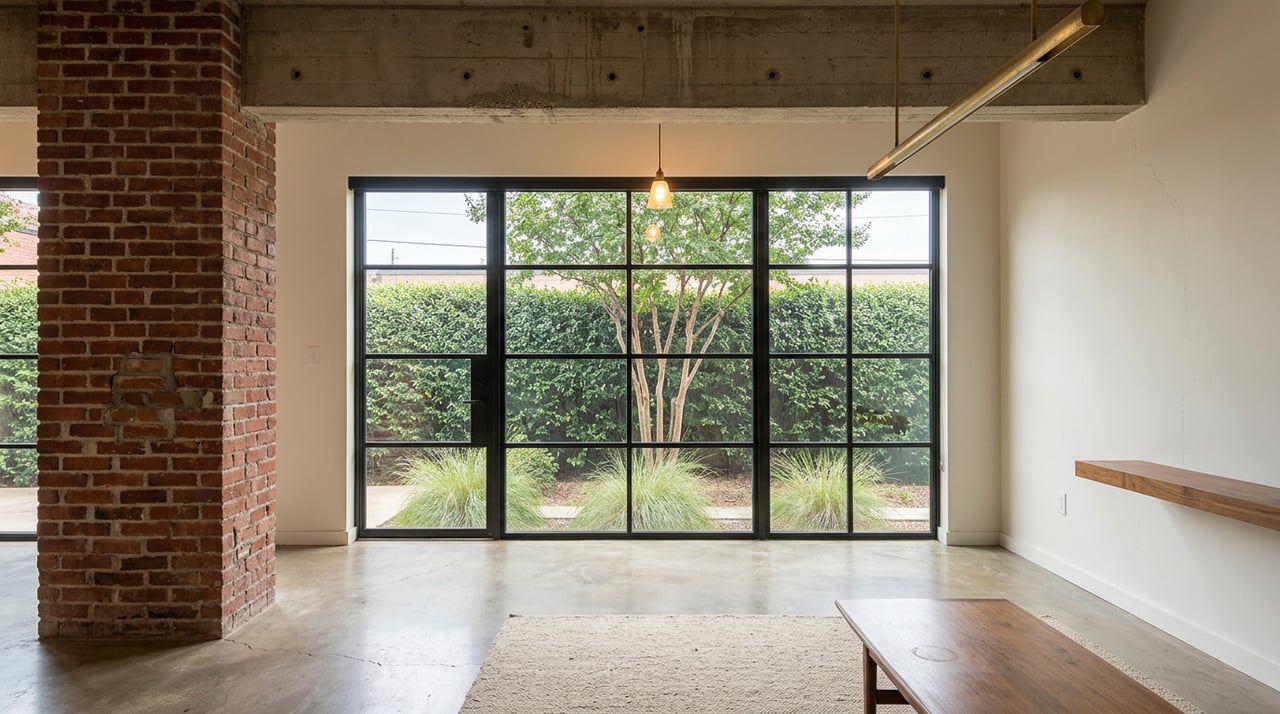
A buyer touring a loft at Montgomery Plaza this summer asked a simple question about the HOA and got an answer that changed the conversation: in 2021, a hard freeze burst pipes throughout the building, flooded the elevator shafts, and knocked service out for months. The association covered the repair with a special assessment. The building has since put in new lighting, repainted the hallways, and finished a full redo of its rooftop pool deck. But the freeze story is the kind of thing a listing photo never shows you, and it's exactly the kind of detail that separates a buyer who understands what they're purchasing from one who's buying a view.
That's the small version of a larger pattern playing out across Fort Worth's Cultural District right now. The median condo listing price sits at $415,000, with homes typically spending 43 days on market. Those are the numbers every portal will show you. What they won't show you is that average rents in the Cultural District are down 20.27% year over year as of August 2026, even before a $1.7 billion neighbor finishes moving in next door. Read only the price data and you'd assume steady, museum-adjacent demand. Read the rent data and a different story starts to surface.
What a 1928 Loft Actually Costs to Own
Montgomery Plaza is the district's signature historic conversion: a 1928 Montgomery Ward distribution warehouse turned into 243 residential units in 2007, with 12-inch concrete walls and windows original to the building. One-bedroom units in the 807 to 1,263 square foot range have recently listed between $299,900 and $349,000, while the rare four-bedroom layouts, some running past 4,900 square feet, have priced around $830,000. Monthly HOA fees run $600 to $2,000, generally scaling with unit size, and cover a genuinely large amenity package: a resort-style rooftop pool deck often described as the biggest in Texas, a fitness center, a theater room, and secured garage parking.
The fee range is wide enough to matter. A buyer comparing two similarly priced units in the same building could be looking at a $1,400 monthly swing depending on square footage and which tower they're in. That's before property taxes. It's also before finding out whether the building's reserve fund fully absorbed the 2021 freeze costs or whether owners are still paying down that assessment through elevated dues. Older buildings with genuine architectural character carry genuine older-building risk, and the HOA's financial documents, not the listing photos, are where that risk shows up.
A 308-Unit Neighbor Is Moving In
Two miles west of downtown, on the edge of the Cultural District along the West Fork of the Trinity River, construction crews broke ground in February 2026 on the first phase of Westside Village. The 37-acre project, developed by FW Westside RE Investors, a partnership between Larkspur Capital and Robert Bass's Keystone Group, sits at the northeast corner of University Drive and what the city renamed Westside Drive, a stretch of road that spent decades as White Settlement Road before a 9-2 council vote changed it.
Phase one includes a 308-unit luxury residential building and 100,000 square feet of Class AA office space, with ground floor retail, two restaurant concepts, and a private social club connected by a shared underground garage. Michael Hsu Office of Architecture is designing the office building, Corgan is serving as architect of record and full-service architect for the residential tower, and Moss Construction is handling the build. The timeline has shifted somewhat since the September 2025 announcement, which targeted 2028 for phase one. By the time officials broke ground, the publicly described scope of that same phase had grown to include a 150-room hotel and additional retail, with completion now pushed to the end of 2030, according to Fort Worth Inc's coverage of the groundbreaking. What hasn't moved is the 308-unit residential count, and a separate phase of the master plan is slated to include a stand-alone condo building, meaning the new competition eventually extends beyond rentals into direct for-sale inventory.
At full build-out, expected across four phases running into 2035, Westside Village adds 1,785 residential units, 880,000 square feet of office space, and 238,000 square feet of retail to a corridor that currently has none of it. The site is replacing a former Fort Worth ISD administration building and a chunk of the Autobahn dealership, which is relocating to a new 75-acre campus at Chisholm Trail Parkway and Oakmont Boulevard. According to Fort Worth Report, the city backed the project with a $125 million incentive package tied to a 15-year partial property tax abatement, projecting roughly $121 million in new tax revenue over the life of the agreement. Just south of the site sits the Foundry District, home to Blackland Distillery, Angelo's Barbecue, Clay Pigeon, and Doc's Records, and across the street is the Panther City District, anchored since 2023 by Fort Brewing and Agency Habit. The neighborhood isn't undersupplied with things to walk to. It's about to be oversupplied with places to live.
Reading the Numbers Together
| Metric | Current snapshot | What's coming |
|---|---|---|
| Median condo listing price | $415,000 | — |
| Typical time on market | 43 days | — |
| Year-over-year rent change (Aug. 2026) | -20.27% | — |
| Phase 1 new residential supply | — | 308 luxury units, plus a planned stand-alone condo building |
| Full build-out, all phases | — | 1,785 residential units by roughly 2035 |
Put side by side, the story isn't that the Cultural District is cooling off. It's that the district's rental market is already absorbing softer demand while a project roughly five times the size of Montgomery Plaza's unit count prepares to deliver its first tranche. A softening rental market ahead of a supply wave is not a coincidence you'd notice from the median price alone, and it's the kind of thing that should change how a buyer approaches negotiation, not whether they buy.
What This Means If You're Making an Offer
A buyer weighing a historic loft against a newer high-rise unit right now has more room to ask hard questions than the "hot museum district" narrative would suggest. That doesn't mean walking away from the neighborhood. The Kimbell, the Amon Carter, and the Modern aren't going anywhere, and the walkability that draws people here in the first place hasn't changed. It means treating due diligence as leverage rather than formality. Before writing an offer on any Cultural District condo, it's worth requesting:
- The HOA's most recent reserve study and audited financials, not just a summary
- Meeting minutes from the past 12 to 24 months, to catch any pending special assessments before they're finalized
- A history of prior assessments, including cause and resolution, the way Montgomery Plaza's 2021 freeze repair shows up in board records
- Recent comparable sales and expired listings in the same building, not just the neighborhood, since pricing can vary building to building more than block to block
- Current rental comps if the unit is a potential investment, given the year-over-year rent decline already in the data
None of this is about assuming the worst. It's about buying with the same information a patient seller already has.
A Few Questions Worth Asking
Does new supply always mean falling prices? Not automatically, and not evenly. New apartment supply competes hardest with existing rental units and with newer condo product marketed on similar amenities. A 1928 warehouse conversion with architectural character that can't be replicated in new construction tends to hold a different kind of demand, but that demand still depends on the building's financial health, not just its history.
Is a historic conversion or a newer high-rise the safer buy right now? Neither is inherently safer. The historic building carries building-system risk that shows up in HOA documents. The newer building carries more direct exposure to whatever pricing Westside Village sets once its residential tower and eventual condo building open nearby. The honest answer is that both require the same homework, just aimed at different questions.
If you're weighing a Cultural District condo against what's coming a few blocks away, or trying to figure out what a specific building's HOA history actually means for your offer, Willoughby Agency can walk the numbers with you before you're standing in front of a counteroffer. Schedule a private consultation and we'll pull the building-specific data that the listing sheet leaves out.