Walk West Magnolia Avenue on a Saturday morning in late August and the street looks the way it always looks: strollers outside the coffee shops, a line forming somewhere before ten, somebody's dog tied to a bike rack. But stand still for a minute and count what's changed since spring. A wine bar that spent a decade hosting weddings is gone. A building that has been three different restaurants since the 1920s just sold. And at least six storefronts that didn't exist in January now have menus taped to their windows.
None of that reads as unusual if you take it one headline at a time, which is how most people have been reading it. Taken together, it says something the individual stories miss. Magnolia isn't cycling through restaurants faster this year. It's cycling through owners.
The building that has been three restaurants since 1926
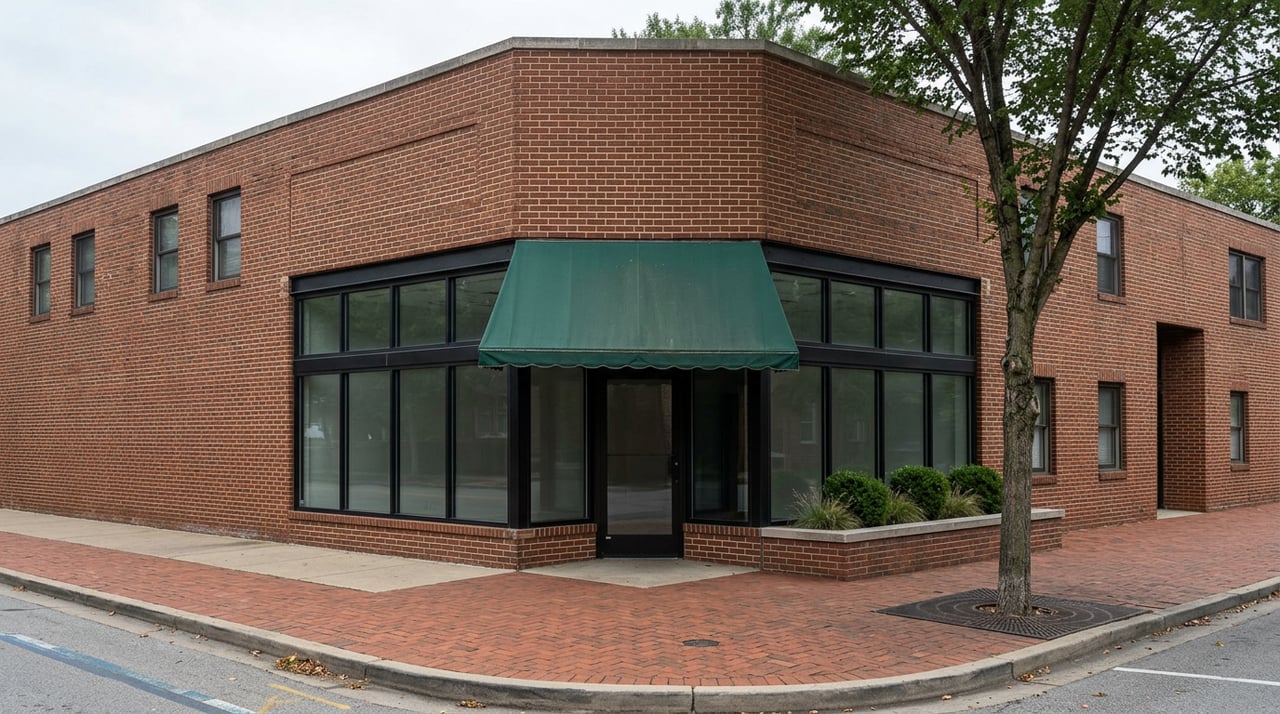
The address is 1109-1121 W. Magnolia Ave, an 8,388-square-foot building on one of the street's busiest corners, and its history reads like a short version of the corridor's own. A Greek immigrant named Peter Kolius, who came to Fort Worth in 1918 to join his brother's candy business, opened a café there under his own name. It ran from 1926 to 1952. Decades later the same building became the original brick-and-mortar home of Heim Barbecue, the restaurant that helped ignite Magnolia's national reputation for smoked meat starting in 2016. Heim closed that flagship location earlier this year. Cherry Coffee has occupied part of the building more recently.
In June, the whole property changed hands. LanCarte Commercial's Brittany Doyle and Sarah LanCarte represented the seller, while Whit Kelly, Trevor Brown, and Gibson Duwe of Transwestern Fort Worth represented the buyer. Doyle described the appeal in terms that had nothing to do with food and everything to do with what the building represents: it had "played a major role" in Magnolia's transformation, and buyers were drawn to its "location, tenant mix, and track record as a destination property."
That's a commercial real estate transaction being described the same way you'd describe an office tower or a shopping center. Not "great tacos." Track record. Tenant mix. Destination property. A hundred years of a single address going café to barbecue empire to coffee shop just got priced as an asset, not a restaurant.
The bar that got nominated for an award and closed anyway
A few doors down, at 1101 W. Magnolia Ave, a different kind of ending played out. The bar started as Kent & Co. Wines in 2014, opened by Fort Worth entrepreneurs Will Churchill and Corrie Watson of Frank Kent Motor Company. In 2019 it sold to Marty and Marilyn Englander and became The Magnolia, a wine bar known for one of the longest lists in town and a full bar that included a golfer's favorite called the Transfusion. It hosted TCU parent weekends, corporate parties, weddings.
In April 2026, The Magnolia was nominated for Bar of the Year at the CultureMap Tastemaker Awards. Weeks later, on May 16, it poured its last glass. The owners' note to customers thanked them for the memories without explaining the business reasons behind the closure.
That sequence, nominated for an award, closed anyway, is the part worth sitting with if you live near here. A packed room and a good write-up don't protect a lease. On a street where a single building can now sell on the strength of its "tenant mix," the calculus for any individual tenant gets harder even while the corridor overall gets more popular. Being loved by regulars and being able to renew at whatever the next rent is are two different problems.
Where the new storefronts actually landed
Here's the part that's easy to miss if you only read one opening announcement at a time: almost none of this year's new arrivals are filling empty storefronts. They're filling spaces where something else on Magnolia's own timeline just ended.
- Vicela: Crafted Excellence, a coffee and cocktail lounge, took over the tasting room at 1411 W. Magnolia Ave that Lockwood Distilling vacated in September 2025.
- Sweet Stacks, serving Asian soufflé pancakes and rice bowls, moved into the space at 1515 Magnolia Ave that used to be Vice Burger.
- Salt & Straw, the West Coast ice cream chain, opened its second North Texas location at 1305 W. Magnolia Ave around June 2026.
- Yoichi Omakase & Handroll took over the former Shinjuku Station space at 711 W. Magnolia Ave, and a second omakase counter, Hiro's, is arriving nearby this summer, giving the corridor two intimate sushi rooms within walking distance of each other.
- Bread & Better Life Café moved into 1010 W. Magnolia Ave, previously home to Beast and Company.
- BobaLou, a boba and gelato café, opened at 1054 W Magnolia Ave.
- A block off Magnolia, at 304 W. Cannon Street, a restored craftsman house is becoming The Oaks, a coffee shop with an in-house roast and a curated seasonal menu. Its companion space, A Cottage House, is already hosting pop-up events next door.
Read that list as a whole and the pattern isn't chaos. It's succession. The street isn't losing its identity to outside chains parachuting in. It's handing addresses from one Magnolia-era business to the next, the way an older building gets a new coat of paint rather than being torn down.
The one day you'll see all of it at once
If you want to see the new version of the street operating at full volume, mark your calendar for Saturday, October 24, from noon to 10 p.m. That's ArtsGoggle, the Near Southside's own arts festival, now in its 23rd year. The event closes 21 blocks of Magnolia to cars, from 8th Avenue down to South Main Street, and typically draws more than 80,000 people over its ten hours. It's produced by Near Southside Arts and Near Southside, Inc., and every restaurant and bar along the route, new or old, has the option to register as an official venue and host artists or live music for the day.
For residents, this is the actual test. A soft opening on a Tuesday afternoon tells you almost nothing about how a new coffee shop or omakase counter handles a real crowd. ArtsGoggle will. It's the first time Sweet Stacks, Yoichi, BobaLou, Bread & Better Life, and whatever ends up filling the Maiden space for the Unlu family's Turkish restaurant will all be open, staffed, and tested on the same day, against the same foot traffic, a few months after most of them signed their leases.
What this actually changes if you already live here
None of this means Magnolia is becoming less itself. If anything, the ownership shift argues the opposite: buyers are paying for a building's history as a "destination property," not tearing it down to build something generic. But it does mean the rules for any single business here have changed. A great write-up and a loyal following used to be enough to survive on this street. Now there's a second variable in play, whoever owns the building, and what they think the address is worth.
For the people who walk this street every week, that's not an abstraction. It's the difference between a favorite spot lasting five more years or closing on short notice regardless of how full it was on a Friday night. Keep an eye on your favorites. And put October 24 on the calendar, because that's the day you'll get to see the new Magnolia, all of it, at once.
If you're curious how a corridor like this affects home values nearby, or you're weighing a move into the Near Southside or another Fort Worth pocket entirely, the team at Willoughby Agency follows these neighborhoods closely enough to talk through what a street like Magnolia actually means for the block you're looking at.